
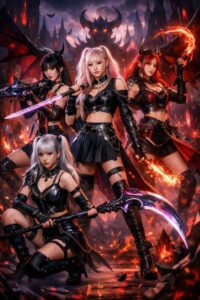
K-Pop Demon Hunters is a highly creative and visually striking concept that merges two seemingly different worlds: the glamorous universe of K-pop and the dark, mysterious realm of supernatural fantasy. The story imagines popular K-pop idols who lead double lives—international music stars admired by millions, and secret warriors tasked with protecting humanity from demonic forces.
During the day, these idols rehearse tirelessly, perform on massive stages, and interact with fans around the world. Their lives appear perfect, filled with fame, fashion, and success. However, once the stage lights fade and the crowds disappear, their true mission begins. Hidden beneath stylish outfits and confident smiles are skilled demon hunters trained to fight ancient evils that lurk in the shadows of the modern world.
One of the most unique aspects of K-Pop Demon Hunters is the role of music itself. Songs are not only a form of artistic expression but also a source of supernatural power. Rhythms can weaken demons, lyrics can act as protective spells, and perfectly synchronized choreography can unlock powerful combat abilities. Microphones transform into magical weapons, and concerts become large-scale rituals that push back darkness while uniting human energy.
The group dynamic plays a crucial role in the story. Much like real K-pop bands, each member has a distinct role and personality. The leader provides guidance and emotional strength, the main vocalist channels powerful energy through her voice, the rapper uses speed and precision in battle, and the dancer combines agility with flawless combat techniques. Their strength lies not only in individual abilities but in teamwork, trust, and friendship.
Beyond action and fantasy, K-Pop Demon Hunters explores deeper themes. It reflects the intense pressure faced by idols, the struggle to maintain a flawless public image, and the emotional toll of constant expectations. The demons they fight can be seen as symbols of fear, doubt, anxiety, and societal pressure. In this way, the story becomes more than entertainment—it becomes a metaphor for personal growth and resilience.
Visually, the concept is rich and dynamic. Bright neon colors, futuristic cityscapes, and glamorous stage designs contrast sharply with dark shadows, ancient symbols, and terrifying creatures. This balance between light and darkness enhances the storytelling and makes the world feel both modern and mythical.
Ultimately, K-Pop Demon Hunters is a celebration of creativity and empowerment. It shows how art, unity, and self-expression can stand against chaos and fear. By combining global pop culture with timeless fantasy elements, the concept offers a fresh and exciting narrative that resonates with fans of music, action, and storytelling alike.